
After a yearlong, $41-million renovation, the historic Castro Theatre has reopened as a reimagined live performance venue—blending cutting-edge engineering and modern production capabilities with the preservation of one of San Francisco’s most treasured cultural landmarks.
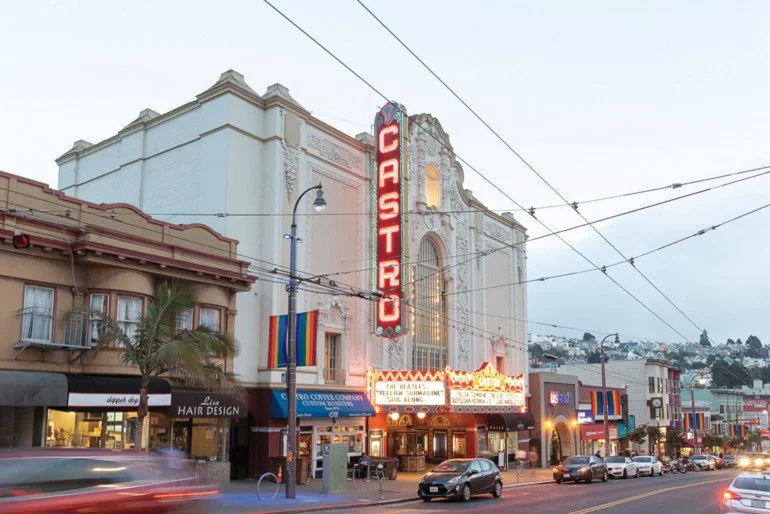
Photo by Steve Kepple
The Castro Theatre: A San Francisco Icon
For more than a century, the Castro Theatre has stood as one of San Francisco’s most beloved cultural landmarks. Constructed in 1922, the theater quickly became a cornerstone of the neighborhood—first as a grand movie palace and later as a global symbol of LGBTQ+ culture, film, music, and community gathering.
A Thoughtful Transformation
Under the ownership of the Nasser Family, a major renovation project was launched to reimagine the historic venue as a state-of-the-art live music performance space—while preserving the architectural and cultural integrity that made it iconic in the first place.
The 24,488-square-foot, two-story building with a partial basement retains its historic shell, but the interior has been carefully reconfigured. The renovated theater will accommodate approximately 1,400 patrons, introducing new tiered standing areas and three bars on the main floor. The balcony remains a seated experience, with significant upgrades to the upper lobby. The stage itself has been fully transformed into a modern live-performance platform, complete with advanced rigging, lighting, and production systems.
The design team for the project includes CAW Architects, with construction led by Alarcon Bohm. MEYERS+ ENGINEERS provided mechanical, electrical, plumbing and fire protection, and technology services for the project.
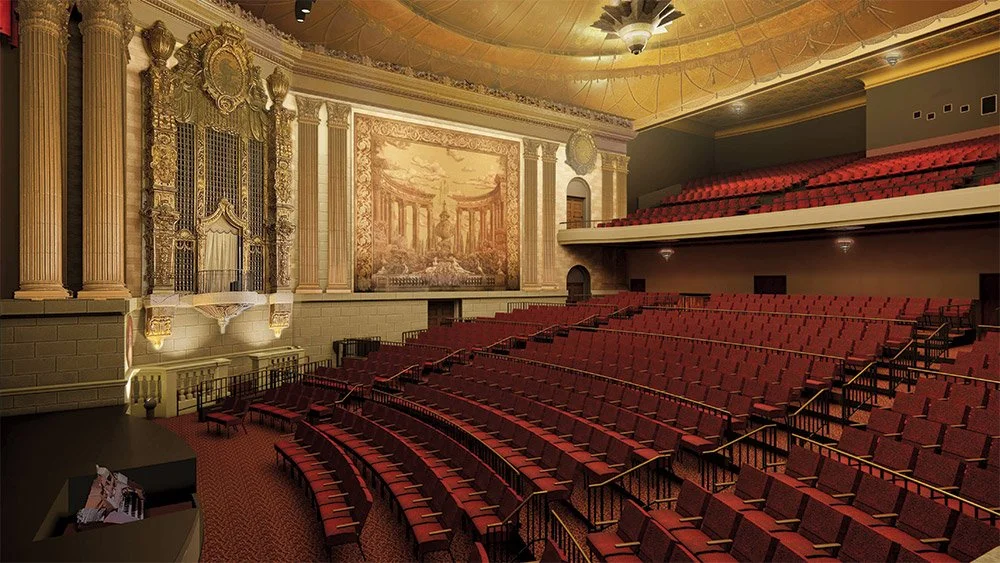
Seating room plan
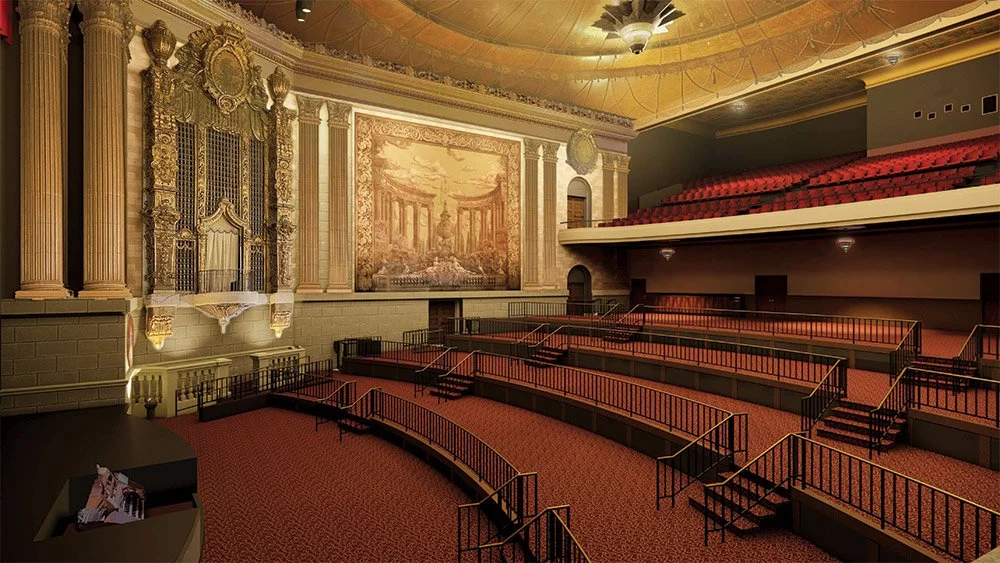
Standing room plan
Engineering Features
New rooftop HVAC units were introduced to meet the demands of a live music venue—marking the first time in its history that the Castro Theatre has ever been fully air conditioned. Rather than penetrating the theater’s historic interior walls, MEYERS+ designed a routing strategy that runs supply ducts down the exterior of the building before re-entering beneath the floor. This approach preserved architectural finishes while delivering modern climate control performance essential for audience comfort and equipment reliability.
The transition to a live performance venue required substantial electrical upgrades to support high-capacity sound, lighting, and production systems. Similar to the HVAC solution, new power conduits were strategically routed along the building’s exterior to the roof—minimizing invasive impacts to historic elements.
To support the additional weight of upgraded speakers, lighting arrays, and rigging systems, a new structural steel frame was introduced at the roof level. This frame connects to the building’s exterior walls and existing long-span trusses, penetrating into the attic to carry suspended production loads safely and efficiently.
The renovated theater now supports advanced sound reinforcement, lighting control, communications, and life-safety systems—positioning it as a premier live music destination in San Francisco.
Ready for Reopening
On February 6th, following the completion of its renovation, the Castro Theatre officially reopened its doors to the public. MEYERS+ had the honor of attending the grand reopening, witnessing firsthand the culmination of more than a year of intensive coordination, engineering precision, and collaborative execution.
Further underscoring the theater’s renewed prominence, Sam Smith commenced their highly anticipated residency at the Castro Theatre on February 10th, inaugurating the venue’s next era with a world-class production that fully leverages its upgraded stage, rigging, acoustics, and building systems.